How to Keep a Deep Cleaning Schedule
Nobody forgets the dishes. The dishes are right there in the sink, looking at you. It is the oven, the fridge shelves and the bathroom fan that sneak up on you, because nothing reminds you until they are gross.
Quick answer: List the jobs you only do every few weeks or months, give each one its own rhythm, and keep them somewhere that tells you when each is due. Spread them out so no weekend gets all of them. A chore app like Choru repeats each job on its own schedule, and a missed one carries over to today instead of quietly disappearing.
Why the rare jobs get forgotten
Daily chores run on habit and weekly ones on routine. Anything rarer has neither. There is no trigger, so it gets done when someone notices, which is usually when it has turned into a bigger job than it needed to be.
A schedule to start from
Every home is different, so treat this as a first draft and adjust as you go:
- Every 2 weeks: change the bed sheets, clean the shower screen, wipe out the microwave.
- Monthly: clean the fridge shelves, wash the trash cans, dust the baseboards, run the washing machine's cleaning cycle, if it has one.
- Every 3 months: clean the oven, descale the kettle, vacuum under the sofa, wash the shower curtain.
- Every 6 months: rotate the mattress, wash the pillows and the duvet, clean the bathroom fan cover, clear out the freezer.
- Once a year: wash the windows inside and out, wash the curtains, clear the gutters.
Then spread them out. Put the oven in January, April, July and October, and the windows in spring. If everything lands on the same weekend, the schedule becomes a punishment, and it will not last.
Give every job its own rhythm
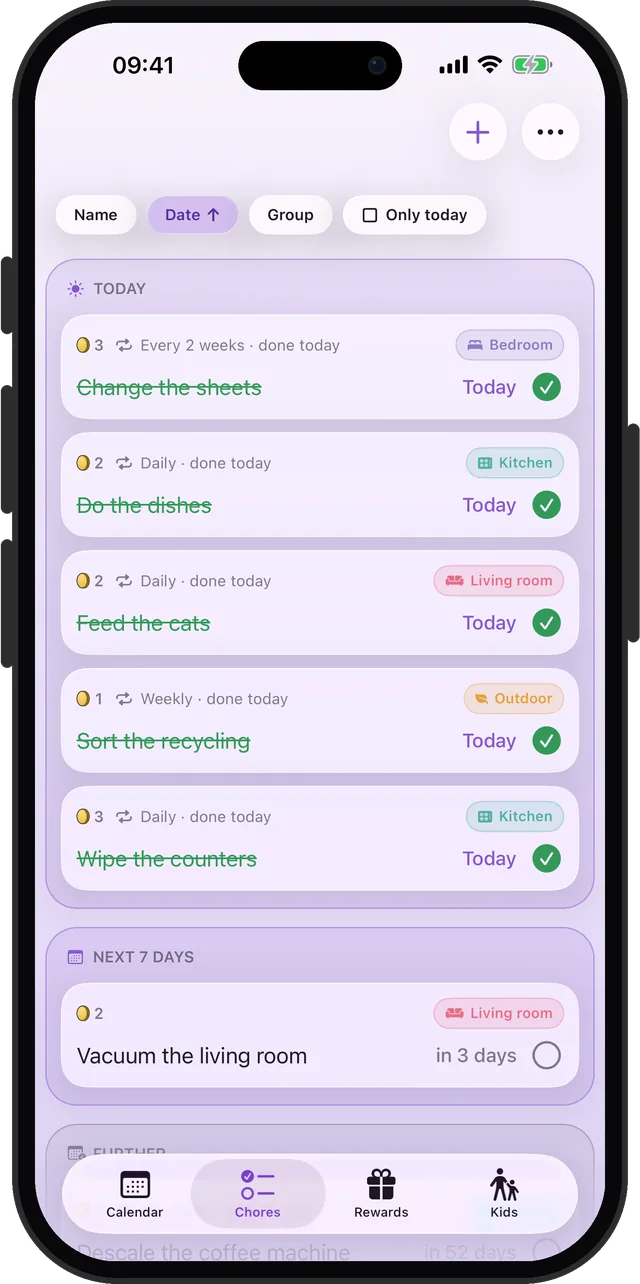
The trick is that each chore repeats on its own clock. In Choru:
- Add the chore, for example Clean the oven.
- Under Repeat, pick Quarterly, or Custom for a rhythm like every 6 weeks or every 6 months.
- Pick the day it starts, and tag it with the room, like Kitchen.
- Save. It waits quietly until it is due, then shows up on that day's list.
Some jobs do not need a fixed date. Make those anytime tasks instead: tick one off whenever you get to it, and it comes back a month, three months, six months or a year later.
When you miss one
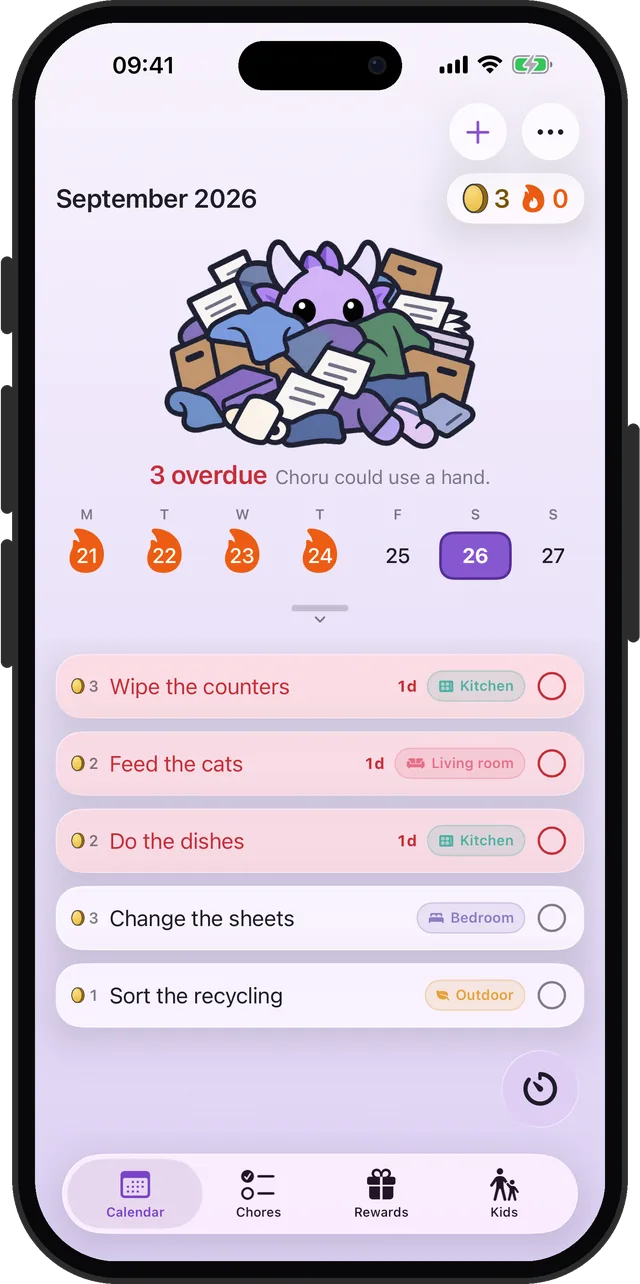
You will. Life happens. On a paper schedule, a missed job is simply gone until someone remembers. In Choru it carries over to today as one row, with how late it is, so the oven that was due three weeks ago is still there, asking politely.
See the month ahead
Pull the week calendar down to open the whole month. A heavy weekend is easier to dodge when you can see it coming.
Every chore back on its own schedule
Daily to yearly repeats, and a missed chore carries over instead of disappearing.